
STELLAR SPACES™
Designed for the Finest Experience of the Cosmos — Every Part of the Observatory Shaped Around the Night and What it Reveals.
Simply Put, We Help You Create the Observing Experience of Your Dreams
STELLAR SPACES™ begins with the site and its context. Before we draw a single line, we study the conditions on the ground and the rules that govern what can be built there. What we learn guides everything that follows.
An observatory is an instrument as much as it is a building. Its success comes from the expertise behind it: maintaining a stable interior for the optics, protecting the building against wildfire and the elements, and designing for minimal upkeep over the years. This is what we bring to every project. Every decision serves to place the telescope in the ideal environment for observing the cosmos.
The resulting structure is not a shed with a telescope inside it. It is an observatory designed around the way you observe.
What Makes an Observatory Work
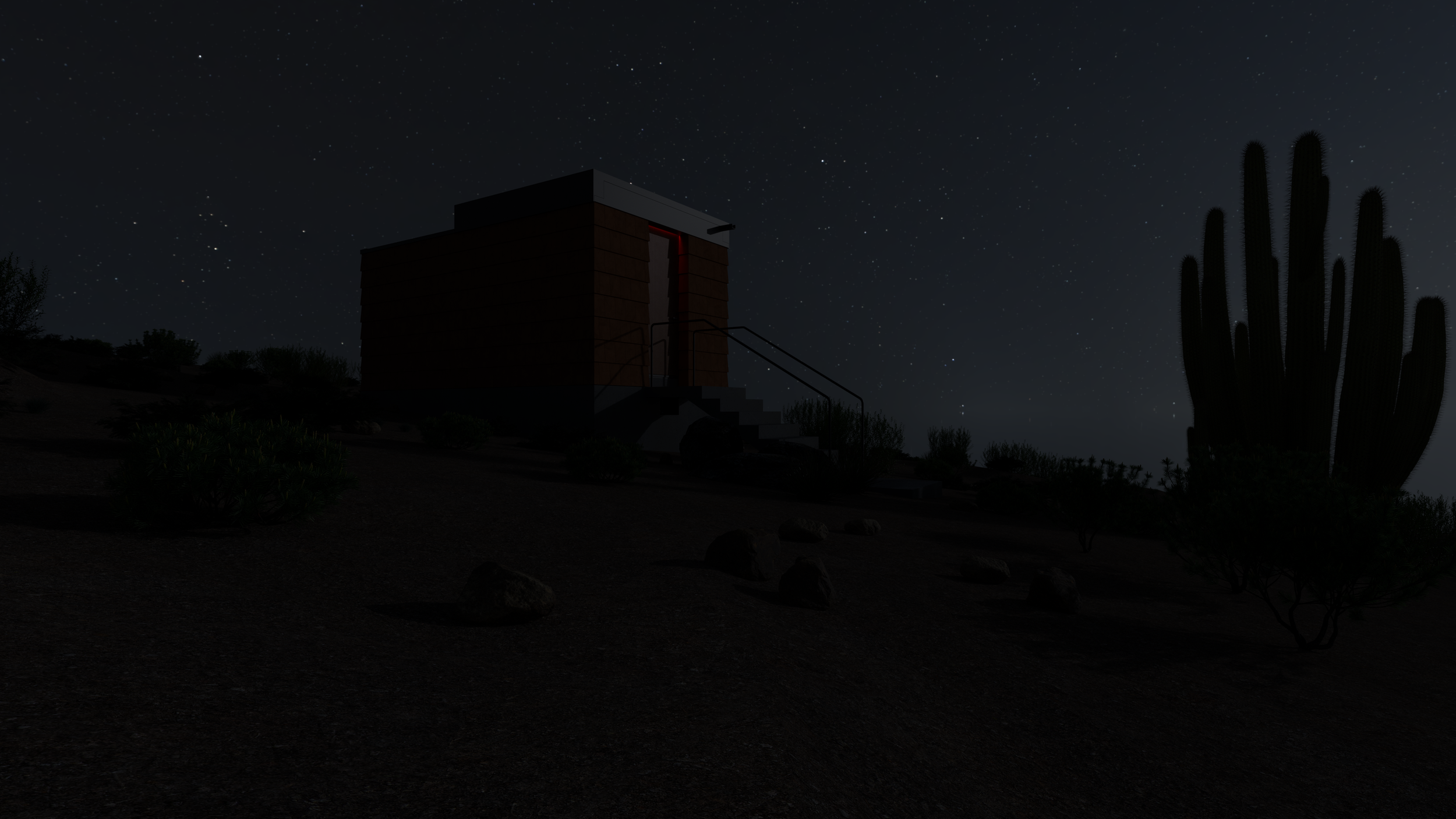
A working observatory does three things. Its materials are selected to work with the environment, chosen to reflect the day's heat rather than store it and to equalize quickly with the night air, so the structure and the optics acclimate without a long wait and the seeing stays steady. It endures, built to last in remote locations and to resist fire. It can be built where you want it. Permits and entitlements are their own hurdle, one an architect helps you and the local jurisdiction work through, from a good site to a finished observatory. Get these right, and what stands between you and the night is only the night itself.
Built for Remote Country
Often, the darkest skies are found in the most exposed settings. In many regions, wildfire is a design condition, not a distant risk, so the observatory needs defensible space around it, ember-resistant detailing, and materials chosen for exposure. It must resist wind and weather, stay secure through the long stretches when no one is there, and need little maintenance over the years. Building for all of it from the start costs far less than adding it later.
Low Heat, Steady Air
The most common thing that spoils a night is the building itself. Materials with high thermal mass hold the day's heat and emit it for hours after dark, and that warm air rises as turbulence, directly in the line of sight. We help you choose materials that shed the day's warmth and quickly equalize with the night air, ventilate the interior so trapped heat clears throughout the day, and site the building away from the heat rising off nearby structures. The same attention keeps interior surfaces near the temperature of the night air, so the optics are far less prone to dew. The result is steady air when and where it matters.
Cleared to Build
A design only matters if you can build it. Observatories raise questions most plan reviewers rarely see: how a dome counts toward a height limit, where an accessory structure may sit, what a dark-sky or wildfire ordinance requires, what an HOA or coastal jurisdiction will allow. We work these out early and help guide the project through entitlements and building permits, so approval becomes a path you follow rather than a wall you hit. This is where the S.T.A.R. STUDY™ begins, and why it comes first.
An Observatory Shaped by the Way You Observe
A good observatory works. A great one disappears. It is not a shed repurposed as an observatory. Once the night begins and the roof opens, you are thinking about what you are going to observe, not the building around you. Designing for that is the difference, and it is where our work concentrates.
No two people are the same, and a great observatory is designed around exactly how you are going to use it. An owner who spends the night at the eyepiece needs a different building from one who images remotely with a camera on the telescope and the session run from a warm room or another state entirely. We do not design to a template.
The result is an observatory that belongs exactly where it stands and serves exactly the way you observe. That fit begins with the S.T.A.R. STUDY™ and holds through every phase that follows.
How a STELLAR SPACES™ Project Takes Form
Every project follows the same sequence, because each phase lays the groundwork for the next.

1. ST.A.R. STUDY™
The design process doesn't begin with designing. It begins with research. Before a line is drawn, the S.T.A.R. STUDY™ uncovers what governs your site: the building codes, the regulatory requirements, and the entitlement constraints specific to your jurisdiction. This is where we identify what the project requires and gather the information that lets every phase that follows move forward. The S.T.A.R. STUDY™ is available as a standalone service and is the foundation every STELLAR SPACES™ design is built upon.
2. CONCEPT + DESIGN
Only after that research is complete do we begin designing. Here we formulate the overall concept for the observatory and prepare design ideas that address your project goals along with the regulatory and entitlement requirements the S.T.A.R. STUDY™ uncovered. This scheme becomes the basis for the design that follows.
3. COORDINATE + DEVELOP
With the concept formulated, we bring in the other disciplines the project may require. Together we develop the design further, fixing the size and character of the observatory across its architectural, structural, ventilation, heating and cooling, electrical, fire protection, and material components. This phase covers everything from verifying utility needs to selecting the materials the observatory will be built from.
4. DETAIL + DOCUMENT
The coordinated drawings and specifications now evolve into construction documents. We develop the architectural requirements for construction and permitting in detail: coordinated floor plans, elevations, sections, and details, along with schedules for the building components and specifications the project requires.
5. BUILD
Finally, after the building permits are obtained, construction begins. Our role in this phase is primarily to administer the construction contract. We visit the site to observe and report on progress, attend meetings as the client or the general contractor requests, and provide other construction-related services, including reviewing submittals to verify that the work conforms to the drawings.
The S.T.A.R. STUDY™ is available as a standalone service, for clients evaluating a site, planning a purchase, or wanting to understand what their land will support before committing to full design.

Planning Your Own Observatory?

The Observatory Planning Pack™ is our free starting point for anyone thinking through a build. It covers the questions worth answering before you commit, from site assessment to roof and enclosure choices, along with the regulatory groundwork the S.T.A.R. STUDY™ goes on to formalize.
Ready to Talk About Yours?
The first conversation is simple. You tell us about the site, whether you own it or are still considering it, the instruments you observe with, and the observatory you have in mind. We tell you whether STELLAR SPACES™ is the right fit and what the path forward looks like. No commitment, no sales process. Just a direct conversation with Scott Schneider.
If you are still evaluating a property, that is often the best time to talk. Understanding what your site will support before you commit is exactly where the S.T.A.R. STUDY™ begins.
Wherever you are, from a first serious telescope to a remote estate observatory, a question is enough to start.