TERRA SPACES™
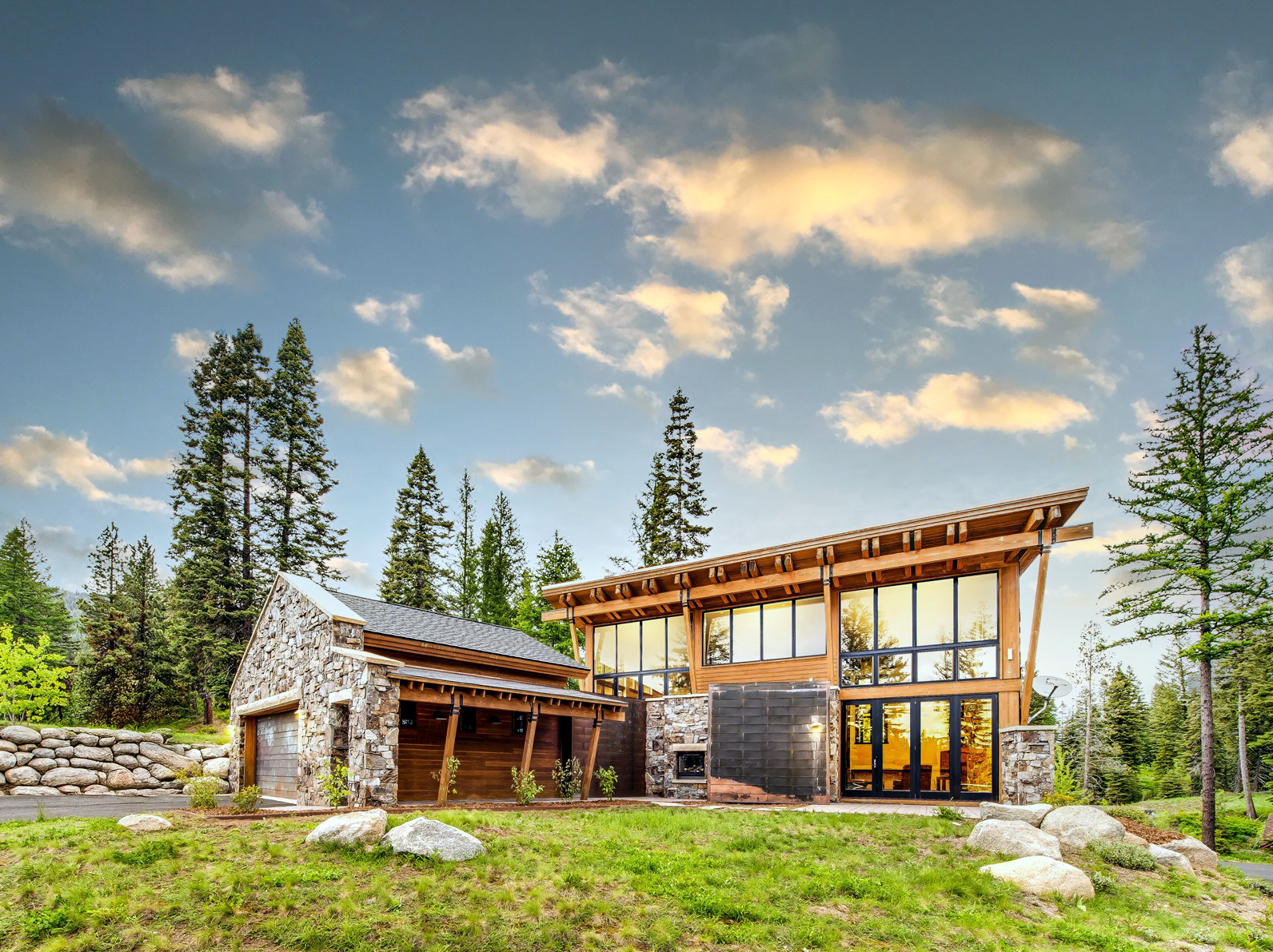
Living Designed From the Ground Up — Each Space Rooted to the Land, Formed by the Quality of Light, and Built Around the Way you Like to Spend Your Days.
Your Home, Shaped by its Setting.
TERRA SPACES™ begins with the site — its orientation, its landform, the quality of light, and the landscape it opens onto. We come to know it before a single line is drawn. What we find shapes everything that follows.
Each house draws its character from the place it stands on. The materials that belong there — their weight, their grain, the way they reflect and absorb light — anchor it to the land. The building is shaped by its ecology: gathering light, shedding water, turning toward the seasons. The rooms orient to the landscape beyond them — their views framed, the outside always present within.
This is not architecture applied to a site, it is architecture that grows from it.
How a TERRA SPACES™ Project Takes Form
Every project follows the same sequence. Not because it is efficient — because each phase builds something the next one cannot begin without.
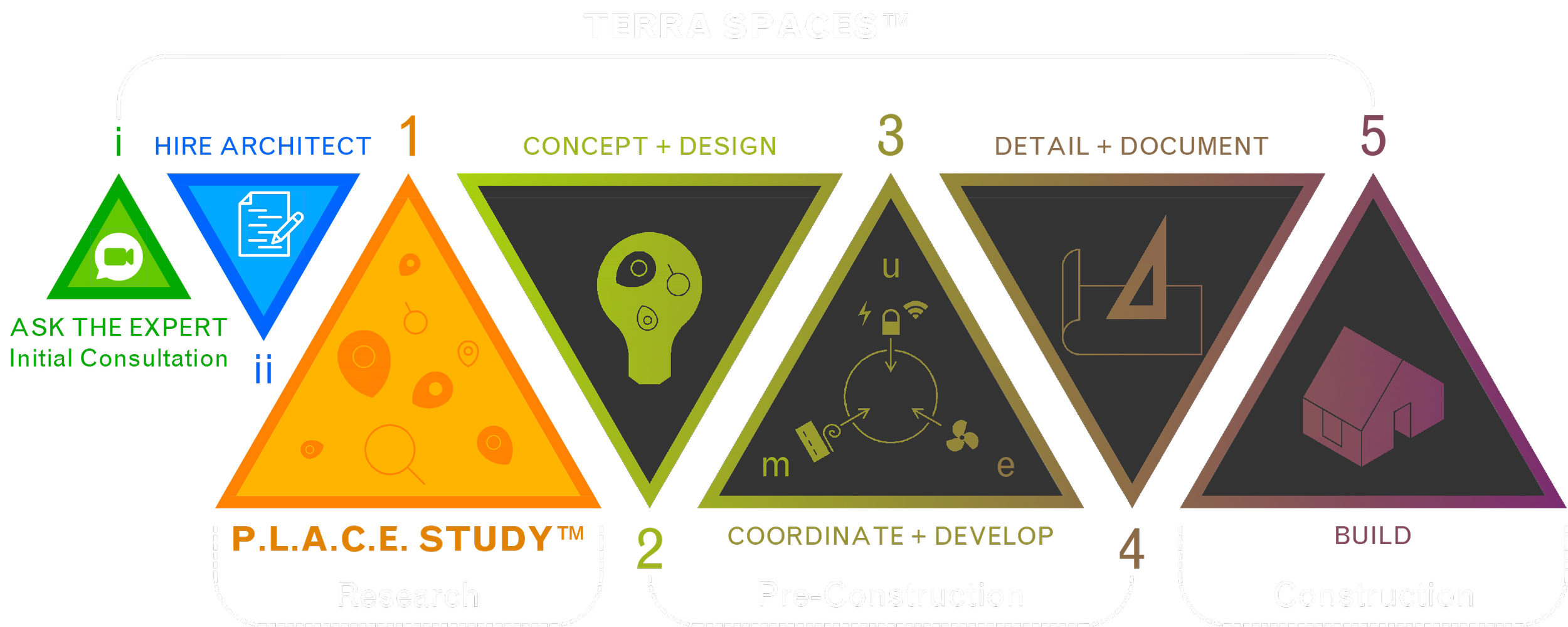
1. P.L.A.C.E. STUDY™
The project begins with the land. Before a line is drawn, the P.L.A.C.E. STUDY™ establishes exactly what your site will support — its planning history, land use designation, zoning envelope, setbacks, and the regulatory constraints that shape what can be built there. You arrive at design with that knowledge already in hand. The P.L.A.C.E. STUDY™ is available as a standalone service and is the foundation every TERRA SPACES™ design is built upon.
2. CONCEPT + DESIGN
With the site understood, we turn to your program — how you live, what you need, what the land is asking of the building. From there we prepare the first design ideas: ones that answer your goals and interests and the regulatory requirements the site carries, and that become the basis for everything the design becomes. Programming conversations give way to schematic design: site plan, floor plan, massing. The early drawings are not presentations. They are the start of a design conversation that runs through every phase that follows.
3. COORDINATE + DEVELOP
The design develops — fixing and describing the size and character of the house in its architectural, structural, mechanical, electrical, plumbing, and material parts. The envelope is resolved — how the building sheds water, manages heat, meets the ground. The material palette is confirmed. Interior architecture comes into focus: ceiling heights, built-ins, apertures, the thresholds between spaces. This is also where the wider design team comes in. We coordinate with the consultants whose work shapes how the house performs and feels — structural, civil, lighting, acoustical, landscape, and others as the project calls for them — so their contributions are woven into the design rather than added to it later. This is where a thoughtful house becomes a specific one.
4. DETAIL + DOCUMENT
This stage develops the design in detail, setting out the architectural requirements for construction: detailed drawings and specifications for permit submission and contractor bidding. Every detail drawn. Every material specified. Every dimension coordinated with structural, mechanical, and civil engineering. The documents give your contractor exactly what they need to build the project as it was designed.
5. BUILD
We remain engaged through construction, administering the construction contract — reviewing submittals, responding to RFIs, and visiting the site at key milestones. The building should be built as it was designed. Our role during construction is to see that it is.
For clients evaluating a site, planning a purchase, or need to understand what their land will support before committing to full design, the P.L.A.C.E. STUDY™ is available as a standalone service
Every Landscape has its own Grammar
Sites That Meet
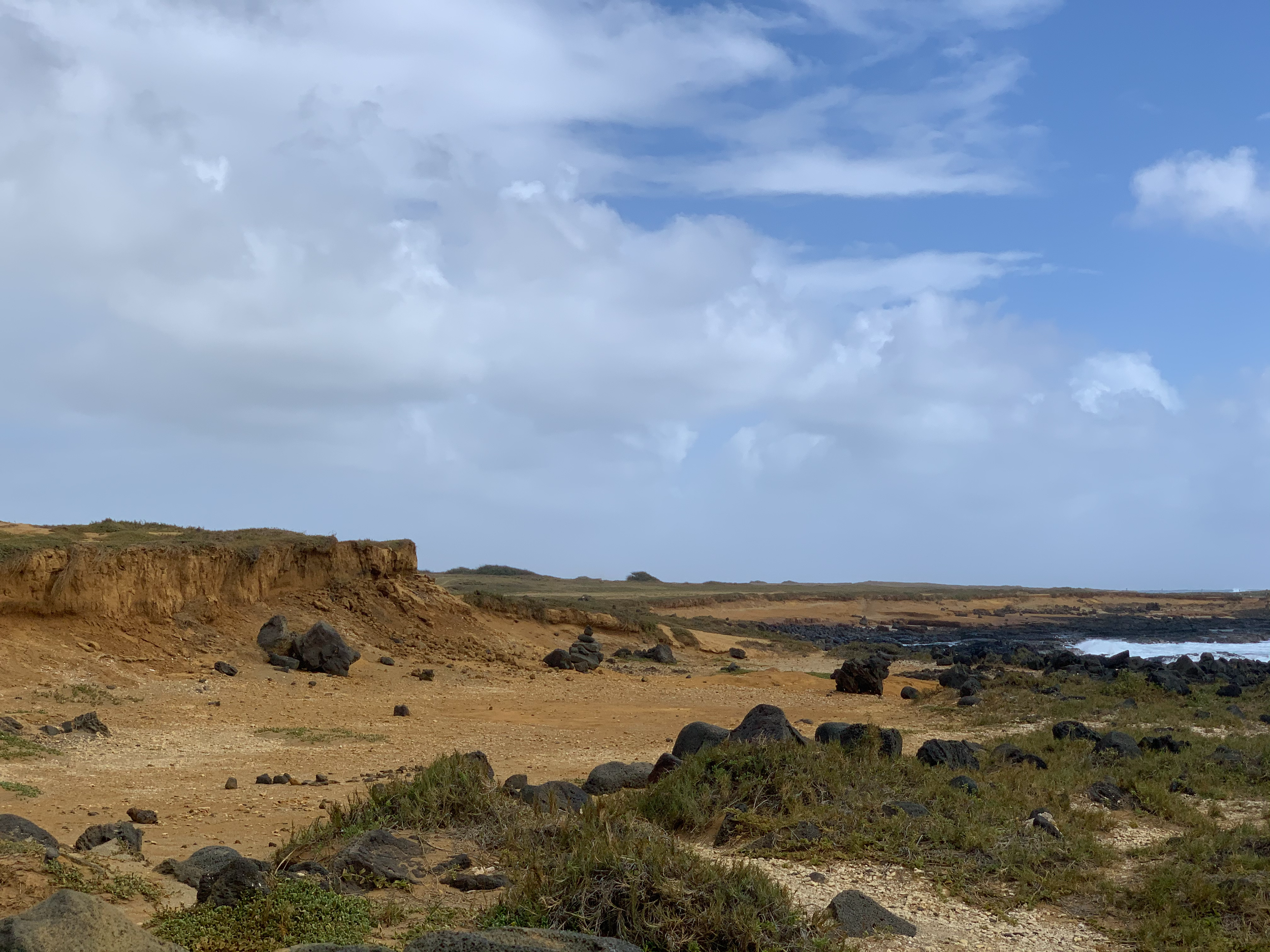
Wind, salt air, and moisture arrive before everything else on a coastal site. The fog and the marine layer set the light. The bluff or the shoreline determines the threshold — where the building meets the edge, how far it reaches toward the water, where it turns away. The materials that belong here hold up to salt and moisture while reading as part of the landscape, not in defiance of it. These sites are among the most demanding a practice can work with. They require that the building earn its position.
Sites That Front
On a mountain site, the terrain decides much of the architecture before a floor plan begins. The slope sets where the building can sit, how it steps with the grade, where it shelters and where it opens. Light arrives differently at elevation — sharper, lower, changing fast with the season — and the design is shaped by it. The materials that belong here are elemental: timber, stone, metal, glass placed to frame the peaks and hold the view. These sites have their own logic — the contrast between sheltered and exposed, the relationship between a building and a ridgeline. Mountain architecture rewards patience and punishes the generic. The approach is the same here as everywhere: read the land first, let the building follow.
Sites That Dissolve the Threshold
On some sites the building should open rather than enclose — places where indoor-outdoor living is not a preference but a fact of the climate itself. Heat, light, and prevailing wind are the design drivers from the first sketch. The building dissolves its boundary and draws the land inside. The threshold moves: not a door or a wall but a gradient — shade to light, protected to open, inside to out. Each of these landscapes carries its own character: the quality of the light, the nature of the wind, the specific way the land meets the sky. The architecture should not pretend otherwise.
A Place That Holds the Life you Came Here to Live
Rooted in the Site
Every TERRA SPACES™ project begins the same way: with the P.L.A.C.E. STUDY™. First we research what governs the land. We study its zoning, its entitlement path, and the building code and regulatory requirements that shape what can be built there. So when we make our first visit to the site, we arrive already understanding the regulatory constraints it carries.
Then we read the land itself: its orientation, the play of light and shadow, the prevailing winds; its slope and adjacencies; and what already stands on it, the trees, the outcroppings, the views worth framing and the views worth screening. The P.L.A.C.E. STUDY™ tells us what the site will allow. The visit tells us what only the landscape can. We can only begin the design with both in hand.
From that reading comes a material palette, not a mood board assembled from what is trending but a set of materials that belong to the place. Chosen for their weight and texture, for the way they reflect and absorb light and weather over time, for colors drawn from the land rather than laid over it.
The envelope, the building's skin, belongs to the ecology of the place. It holds warmth as the light moves across the day, softens the edges of the seasons, and becomes less a barrier than a membrane between the life within and the landscape beyond it.
Indoor-outdoor living is not a feature we add but a quality enhanced by the site: where the threshold falls, how the rooms open, what each aperture frames. The relationship between the interior and the landscape begins in the first sketches and is refined through every revision.
The result is a house that belongs exactly where it stands. That belonging is not added at the end. It grows from both our initial regulatory research with the P.L.A.C.E. STUDY™ and the visits we make to the site. It holds through every phase that follows.
Ready to Talk About Your Site?
The first conversation is simple. You tell us about the site, whether you own it or are still considering it, and what you hope to build there. We tell you whether TERRA SPACES™ is the right fit and what the path forward looks like. No commitment, no sales process. Just a direct conversation with Scott Schneider.
If you are still weighing a property, that is often the best time to talk. Understanding what a site will support before you commit is exactly where the P.L.A.C.E. STUDY™ begins.
Whether you already own your land or are still searching for the right one, a question is enough to start.